2026-07-24
Content
Chemistry relies on four main groups of instruments: glassware for holding and mixing substances, measuring tools for volume, mass and temperature, heating and safety equipment for running reactions, and molecular models for visualizing structures that cannot be seen with the naked eye. A typical secondary school chemistry lab uses between 30 and 50 distinct instrument types across these four groups, ranging from a simple test tube to a digital analytical balance accurate to 0.001 gram.
Below is a practical breakdown of what each category includes, why schools choose specific materials, and how teaching instruments differ from research-grade lab equipment.
Before buying any single item, it helps to see the full picture. Chemistry teaching instruments are generally organized into four functional groups, and a well-equipped classroom keeps a working ratio across all four rather than overspending on just one.
Beakers, test tubes, flasks, burettes and pipettes used to hold, mix, heat and transfer chemicals.
Balances, thermometers, pH meters and graduated cylinders that quantify mass, temperature and concentration.
Bunsen burners, hot plates, fume cupboards, goggles and heat-resistant mats for controlled reactions.
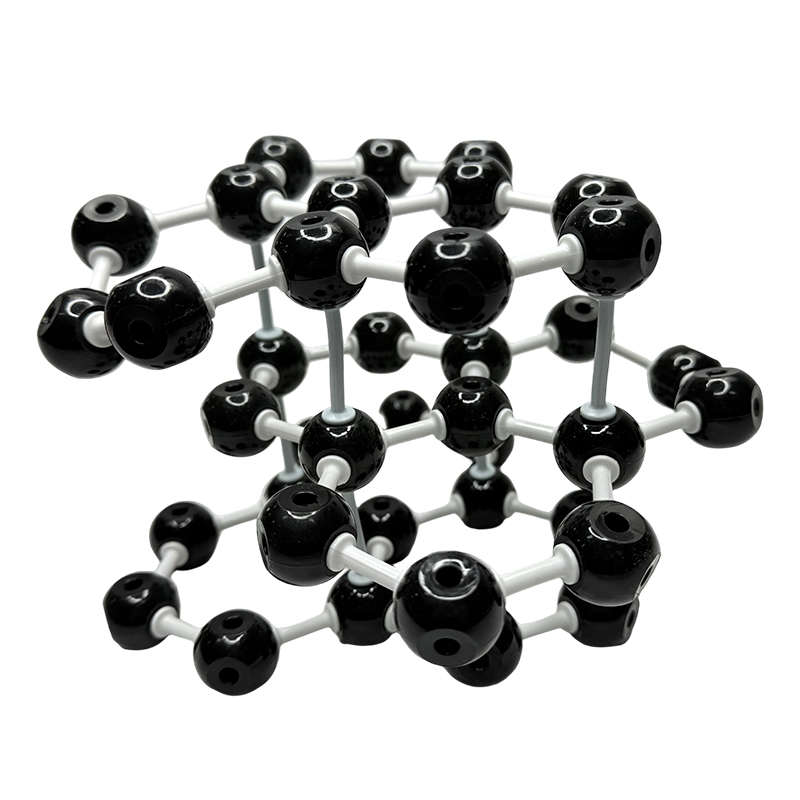
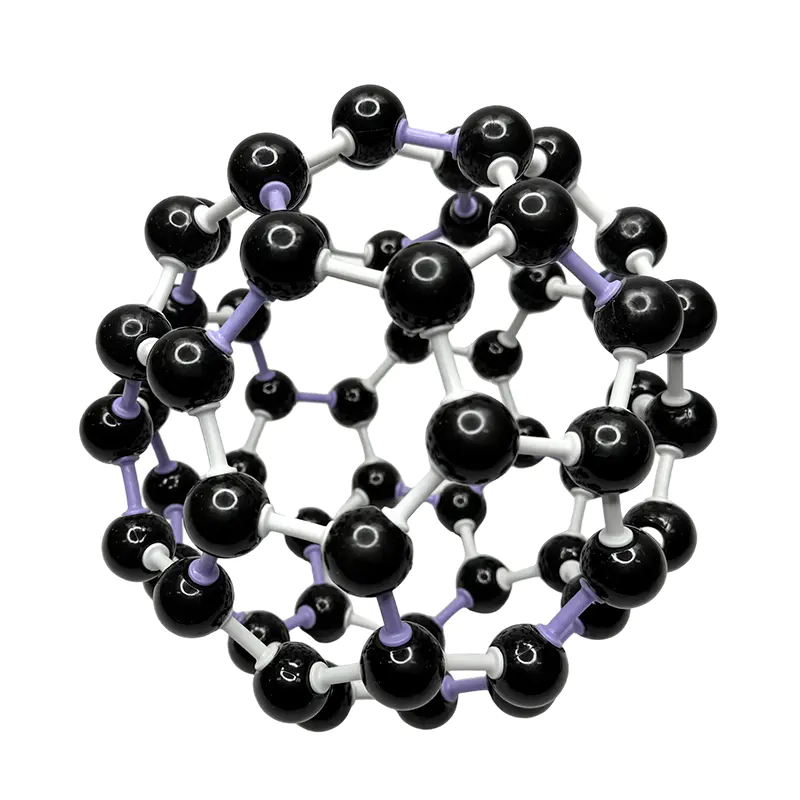
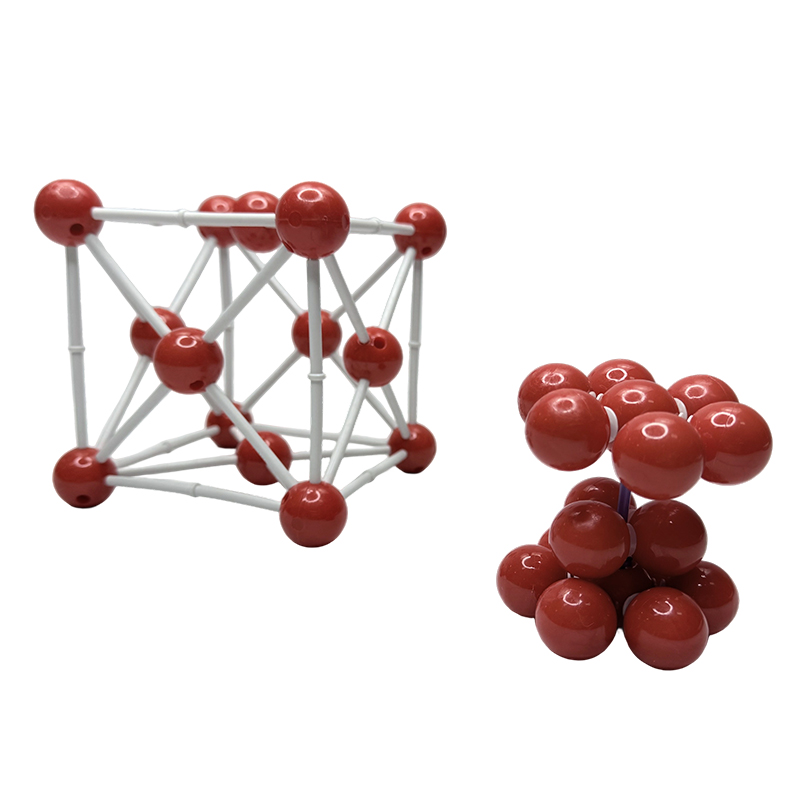
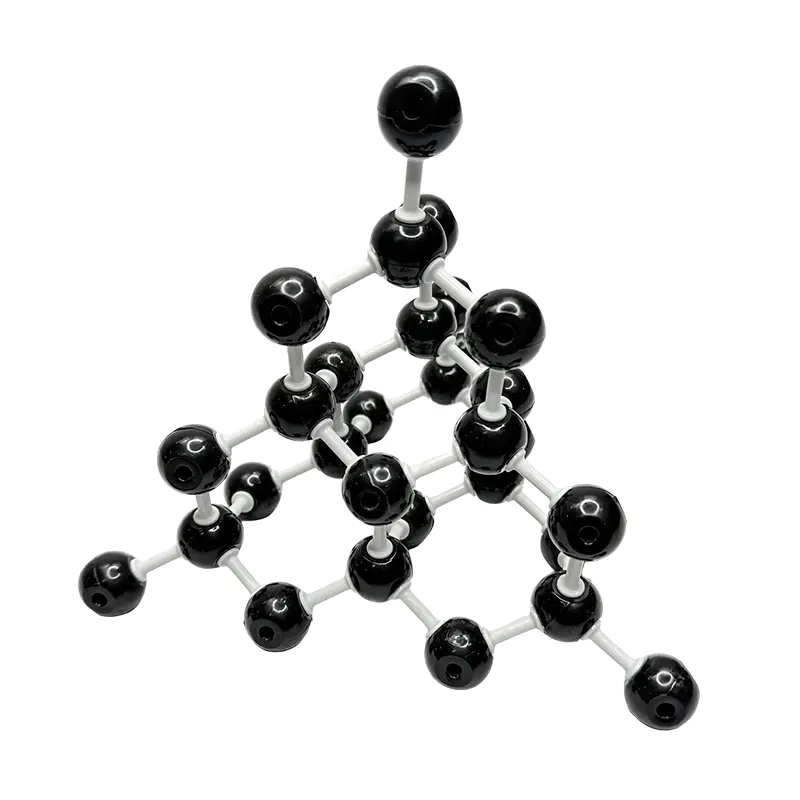
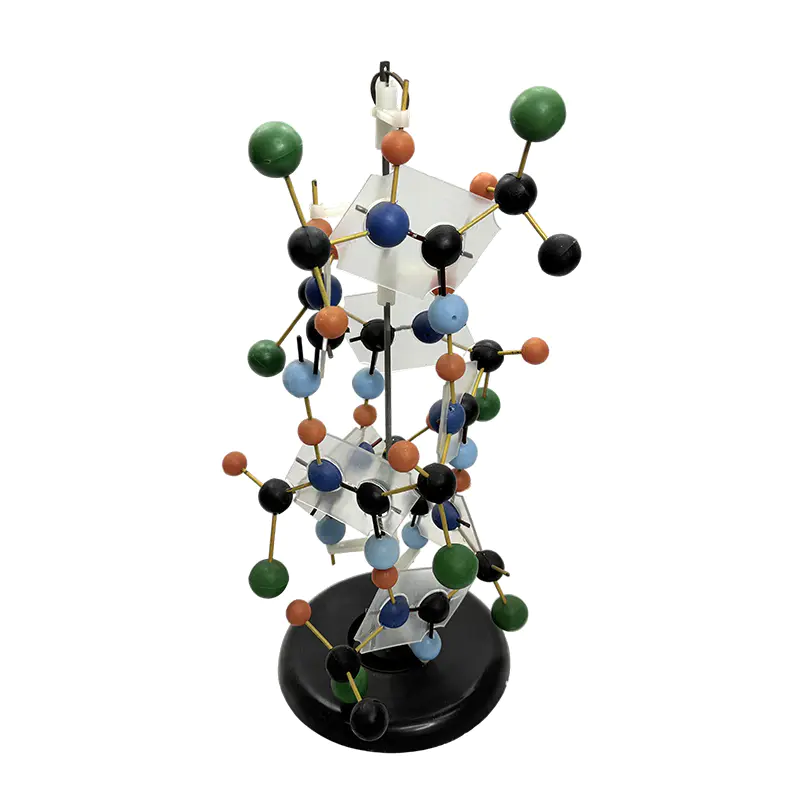
Molecular and crystal structure models that turn abstract chemical bonding into something students can hold.
Chemical glassware accounts for the largest share of daily use in any classroom, often more than 60 percent of total instrument handling time according to school lab audits. Borosilicate glass (3.3 expansion class) is the industry standard because it resists thermal shock up to roughly 165 degrees Celsius of sudden temperature change without cracking.
| Instrument | Common Capacity | Primary Use |
| Beaker | 50 to 1000 mL | Mixing and rough volume estimation |
| Test Tube | 10 to 25 mL | Small-scale reactions and heating |
| Erlenmeyer Flask | 125 to 500 mL | Titration and swirling without spills |
| Burette | 25 to 50 mL | Precise dropwise liquid delivery |
| Volumetric Flask | 100 to 1000 mL | Preparing solutions at exact concentration |
Schools sourcing chemical glassware in bulk usually mix borosilicate items for heating-related tasks with soda-lime glass for basic storage, which keeps unit cost down without compromising safety on the instruments that touch open flame.
Educational measuring equipment is what turns a qualitative demonstration into a quantitative experiment. A modern classroom typically pairs traditional tools with at least one digital sensor to help students compare manual and automated data collection.
For younger grades, many schools switch to compact science kits that bundle a scaled-down balance, thermometer and pipette set into one case, which reduces breakage and simplifies storage between classes.
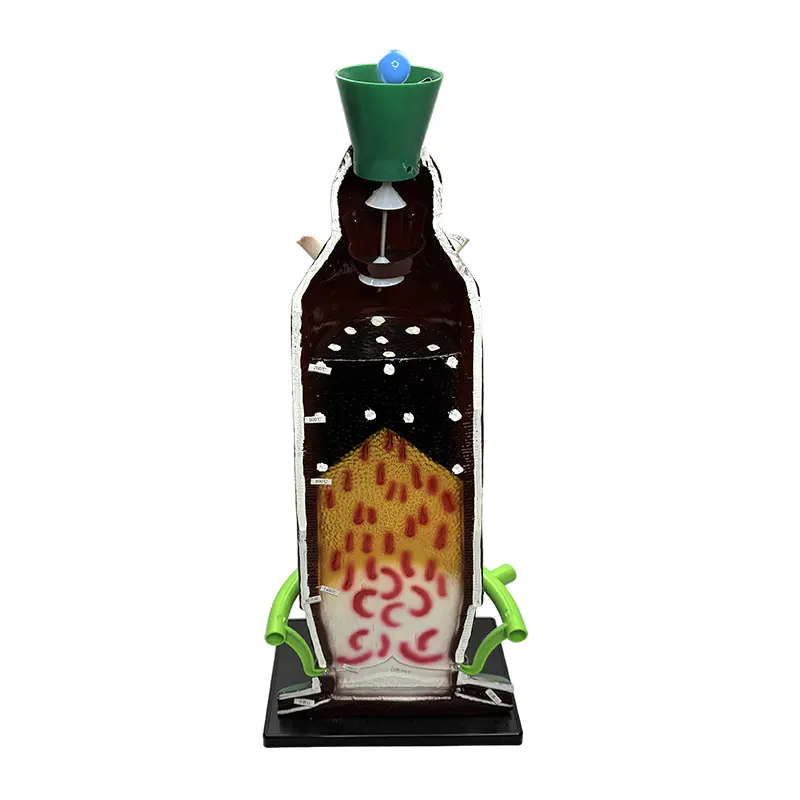
Alongside physical glassware, chemistry teaching models help students visualize crystal lattices, molecular geometry and industrial processes that are impossible to observe directly. The set below is a sample from a supplier catalogue of chemistry teaching instruments and models used in secondary and vocational chemistry programs.
A selection of structural and industrial process models commonly stocked alongside standard chemistry teaching instruments for classroom demonstrations.
No chemistry teaching instrument set is complete without the equipment that makes heating and handling safe. This is also the category schools underinvest in most often, despite it directly affecting classroom safety.
Standard flame source for glassware heating, paired with a ceramic mat rated above 300 degrees Celsius.
Removes vapor from reactions involving ammonia, chlorine or concentrated acids before it reaches the room.
Non-negotiable personal protective equipment for every hands-on experiment involving liquids or flame.
Required by most national school safety codes within arm's reach of any heating station.
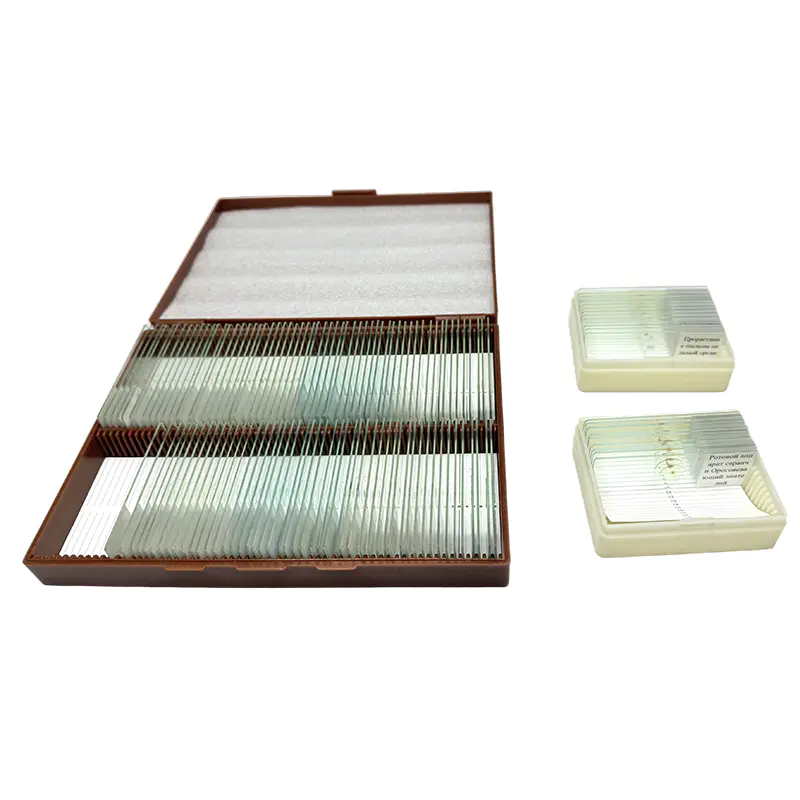
Beyond the glassware and safety gear, a fully equipped chemistry room draws on the broader category of laboratory instruments and apparatus, plus tools shared with biology classes such as the educational microscope for examining crystals, precipitates and organic samples under magnification. Retort stands, clamps, wire gauze, tongs and desiccators round out the supporting apparatus that holds everything else in place during an experiment.
| Setting | Typical Instrument Mix | Approx. Budget Share |
| Primary school science kit | Basic glassware, magnifiers, simple models | Low, under 15 percent of lab budget |
| Secondary school lab | Full glassware set, balances, burners, models | Medium, around 40 percent of lab budget |
| Vocational or college lab | Precision sensors, fume cupboards, analytical balances | High, above 45 percent of lab budget |
Procurement teams get the best long-term value by checking four things before ordering school teaching aids and supplies at scale.
Getting this mix right means a chemistry classroom can run consistent, safe demonstrations for years, with glassware as the daily workhorse, measuring instruments providing the data, safety equipment protecting students, and teaching models making the invisible structure of matter easy to grasp.
Recommended Products


+86-18630650508 +86-0574-62500588

+8618630650508

 No. 588, Chaoyang South Road, Ditang Street, Yuyao, Ningbo City, Zhejiang Province, China


 English
 русский
 Español