2026-06-19
Content
A standard school biology lab requires a core set of instruments and supplies that enable students to observe, measure, and experiment with living systems. At minimum, every lab should have educational microscopes, dissection tools, glassware, biological specimens, and safety equipment. These biology teaching instruments form the foundation for hands-on science education across middle school and high school levels.
No biology teaching setup is complete without quality observation equipment. The compound microscope is the single most important piece of biology lab apparatus — it allows students to view cells, tissues, and microorganisms that are invisible to the naked eye, with magnification typically ranging from 40x to 1000x. For larger specimens, a stereoscope (dissecting microscope) offers a wider working area and three-dimensional view.
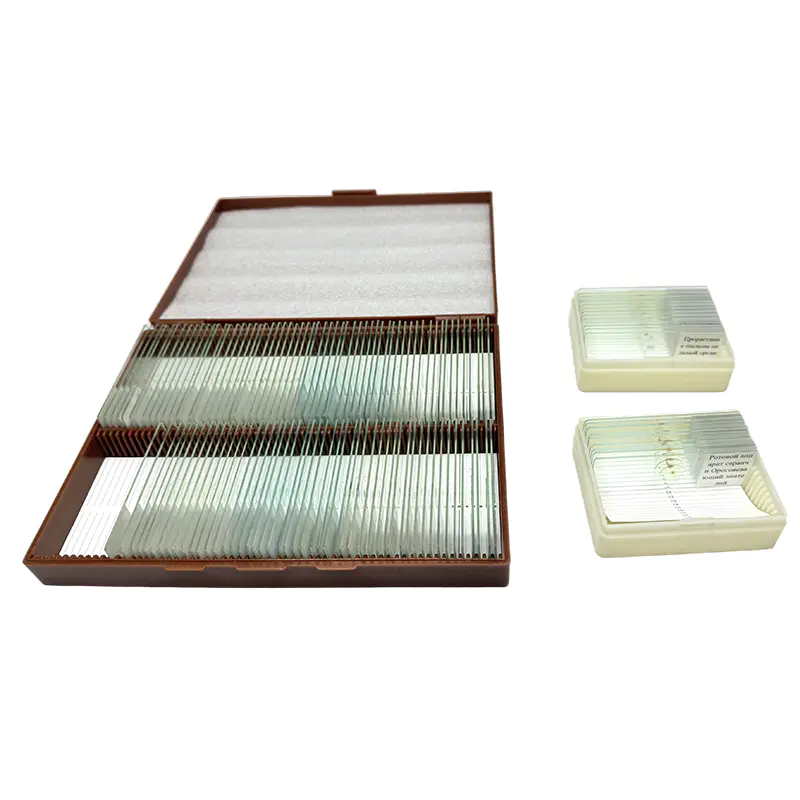
Alongside the microscope, every station needs prepared glass slides and cover slips. Pre-made slides of onion cells, blood cells, or paramecia allow immediate classroom use, while blank slides and cover slips let students prepare their own specimens. A digital microscope connected to a projector or laptop further extends the educational value by sharing live images with the entire class during demonstrations.
| Observation Equipment | Primary Use | Recommended Quantity (Class of 30) |
|---|---|---|
| Compound Microscope | Cell and tissue study | 15 units (1 per pair) |
| Stereoscope / Dissecting Microscope | Larger specimen examination | 5–8 units |
| Prepared Slide Sets | Cell, tissue, parasite observation | 3–5 sets |
| Blank Slides and Cover Slips | Student specimen preparation | 200–300 pieces |
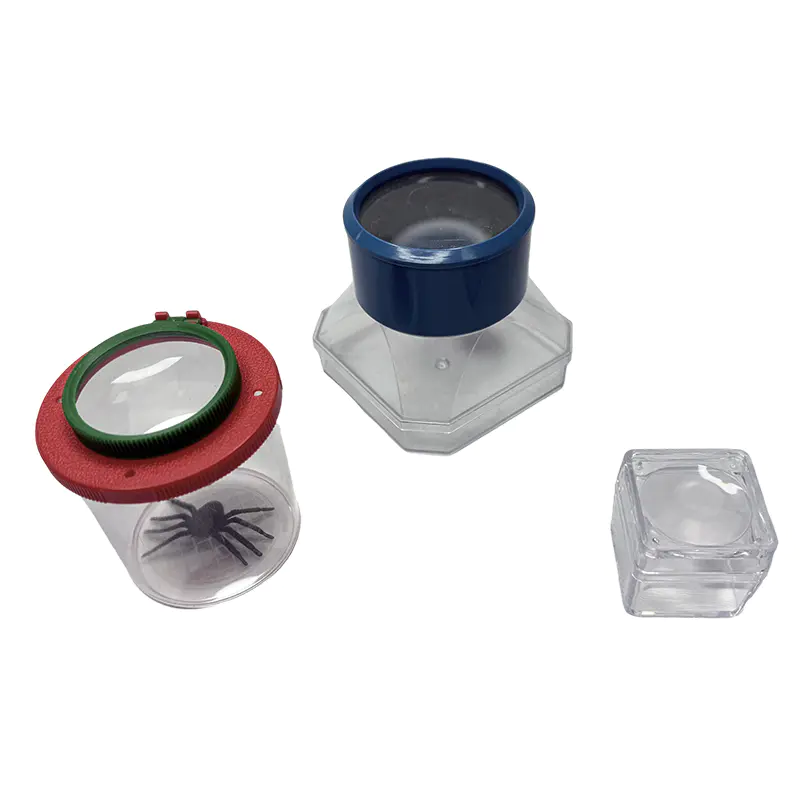
| Magnifying Glass | Preliminary specimen inspection | 15 units |
Dissection is a cornerstone practical activity in biology education. A complete dissection kit includes scalpels, scissors, forceps, dissecting needles, probes, and dissecting pins. Students use these tools to examine the internal anatomy of organisms — common specimens include frogs, earthworms, fish, and plant materials. High-quality stainless-steel instruments resist corrosion and last longer, making them a cost-effective investment for school labs.
Biological specimens and biology teaching models work alongside dissection tools to reinforce anatomical understanding. Three-dimensional models of the human heart, cell structure, DNA double helix, or the human torso are especially effective for visual learners. Preserved biological specimens, such as wet specimens in formaldehyde jars, are used in advanced classes and must be stored and handled according to safety guidelines.
Biology labs share many pieces of chemical glassware with chemistry teaching instruments. Standard items include beakers (50 mL to 1000 mL), Erlenmeyer flasks, test tubes (the most common size is 18 x 150 mm), graduated cylinders, and Petri dishes. Petri dishes are especially critical for microbiology activities — students use them to culture bacteria and fungi on agar growth media.
Droppers, pipettes, and stirring rods are consumable items that should be stocked in significant quantities. Volumetric flasks and burettes may be needed for more advanced experiments involving concentration and molarity. All glassware should be made from borosilicate glass, which resists thermal shock and chemical attack far better than standard glass.
| Glassware Item | Function | Notes |
|---|---|---|
| Beakers (various sizes) | Mixing, heating, holding liquids | 50 mL, 250 mL, 500 mL, 1000 mL |
| Test Tubes | Small-scale reactions and cultures | Standard size: 18 x 150 mm |
| Petri Dishes | Microbial culture and observation | Glass or disposable plastic |
| Graduated Cylinders | Accurate liquid measurement | 10 mL, 25 mL, 100 mL |
| Erlenmeyer Flasks | Mixing and reaction containment | 125 mL and 250 mL most common |
Accurate measurement is fundamental to scientific inquiry. Every school biology lab needs a reliable laboratory balance or scale for weighing specimens and reagents. Digital balances accurate to 0.01 g are standard for high school use, while analytical balances (0.001 g) may be needed for AP-level work. A pH meter or universal indicator paper is essential for experiments involving acids and bases in living systems.
Thermometers are used in experiments involving enzyme activity, temperature-dependent processes, and photosynthesis studies. For labs with a stronger science focus, a dissolved oxygen meter, colorimeter, or conductivity probe extends the range of measurable variables. These educational measuring instruments help students collect quantitative data and develop scientific reasoning.
Biology experiments frequently require controlled heating. A hot plate is the preferred heating device for most school labs due to its safety advantages over an open Bunsen burner — no open flame reduces the risk of burns and fire with biological samples. When gas supply is available, Bunsen burners remain standard for sterilization and heating tasks.
Support apparatus keeps experiments organized and safe. This includes test tube racks, ring stands, clamps, wire gauze, and tripods. Forceps and tongs protect students from burns when handling heated glassware. Wash bottles filled with distilled water keep workstations clean and support solution preparation.
Safety equipment is required before any biology lab work begins. Every student must have ANSI Z87.1-rated safety goggles to protect eyes from splashes and particles. Lab coats or chemical-resistant aprons protect clothing and skin. Nitrile gloves — stocked in small, medium, and large — are essential when handling chemicals, specimens, and biological materials.
The lab itself must have a stocked first aid kit, a fire extinguisher, an eye wash station, and clearly marked emergency exits. Sharps disposal containers are required wherever scalpels or needles are used. Waste disposal must follow local regulations, particularly for biological specimens and chemical reagents.
Beyond instruments, effective biology education depends on good school teaching aids and supplies. Wall charts showing cell division, the human body systems, plant anatomy, and ecological cycles provide constant visual reference. Biology teaching models — including DNA structure models, mitosis and meiosis sets, and animal cell versus plant cell models — make abstract concepts concrete for students.
Science kits bundled around specific topics (genetics, ecology, biotechnology basics) are increasingly popular for structured, curriculum-aligned experiments. These kits typically include reagents, specimens, and instructions for 10–30 student setups, reducing preparation time for teachers significantly.
Not all labs require the same equipment from day one. Middle school biology labs need durable, simple tools — basic compound microscopes, dissection kits, Petri dishes, and beakers cover most curriculum needs. High school biology labs, especially those running AP Biology or IB courses, require more advanced instruments: analytical balances, spectrophotometers, gel electrophoresis systems, and centrifuges.
A practical approach is to invest in tier-one essentials first — microscopes, safety gear, glassware, and basic measurement tools — then expand with specialized biology teaching instruments as budget allows. Purchasing equipment from established laboratory instruments and apparatus suppliers ensures durability, warranty support, and curriculum alignment.
| Category | Middle School Priority | High School Priority |
|---|---|---|
| Microscopy | Basic compound microscope | Digital microscope, stereoscope |
| Dissection | Basic dissection kit | Full dissection kit + preserved specimens |
| Measurement | Digital scale, thermometer | Analytical balance, pH meter, probes |
| Models | Cell model, torso model | DNA model, genetics kits |
| Advanced Equipment | Not required | Centrifuge, gel electrophoresis unit |
Recommended Products


+86-18630650508 +86-0574-62500588

+8618630650508

 No. 588, Chaoyang South Road, Ditang Street, Yuyao, Ningbo City, Zhejiang Province, China


 English
 русский
 Español