2026-05-29
Content
In 2026, the global teaching instruments supply chain is undergoing profound restructuring. Manufacturing capacity for teaching equipment in Vietnam, India, and Indonesia surged 34% year-over-year, directly challenging traditional export patterns. Simultaneously, Chinese exporters of school teaching aids and supplies have defended 67% of the premium market share through technological upgrades and certification system improvements. This supply chain shift represents not simple capacity substitution, but a complex interplay of quality stratification, technological iteration, and regional division of labor, presenting entirely new strategic imperatives for export enterprises.
In 2026, Vietnamese chemical glassware exports reached USD 180 million, representing 41% year-over-year growth, far outpacing China's 11% during the same period. A complete industrial chain encompassing borosilicate glass melting, precision forming, and finishing has formed around Ho Chi Minh City. Vietnamese products' core advantage lies in labor costs 35% lower than China's, combined with zero-tariff treatment under the EU free trade agreement. However, in high-precision burettes and micropipettes within chemistry teaching instruments, China still commands 78% of global market share, with technical barriers remaining insurmountable in the near term.
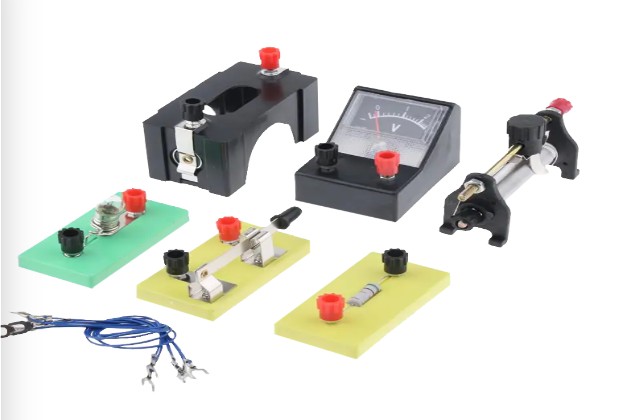
Driven by India's "Self-Reliant India" policy, domestic self-sufficiency in teaching instruments climbed from 42% in 2022 to 61% in 2026. Dozens of physics teaching instruments manufacturers have emerged in Bangalore and Pune, specializing in basic electrical experiment equipment and mechanics experiment equipment. Yet India remains import-dependent for precision categories such as optical experiment equipment and electromagnetic experiment equipment, with imports of premium physics teaching instruments from China reaching USD 230 million in 2026, up 15% year-over-year.
Leveraging demographic dividends and ASEAN internal tariff advantages, Indonesia has become the regional assembly center for science kits. Among school teaching supplies exported by Indonesia in 2026, 60% of components originated from China, 25% locally, and 15% from Japan and South Korea. This "China supplies components, Indonesia assembles, ASEAN distributes" model is reshaping the Southeast Asian teaching equipment supply chain landscape.
In the networked laboratory instruments and apparatus sector, Chinese companies have established significant advantages through IoT technology and scaled manufacturing capabilities. Of the 4,200 educational institutions globally deploying connected devices in 2026, 62% of hardware was supplied by China. Integrated solutions combining smart pH meters, wireless temperature sensors, and cloud-based data management systems remain difficult for Southeast Asian competitors to replicate in the short term. Among digital teaching instruments procured by North American universities, Chinese brands account for 45%, up 12 percentage points from 2023.
Chinese enterprises have established unique competitiveness in biology teaching models through 3D printing and material innovation. Human organ models printed using photosensitive resin and biodegradable PLA materials achieve precision at the 0.1mm level, priced at merely 40% of comparable imported products. In 2026, model products within Chinese biology teaching instruments exports rose to 38% of the segment, while traditional biological specimens declined to 52%, indicating clear product structure optimization.
Educational microscopes represent a paradigmatic case of transformation in China's teaching instrument export upgrading. Five years ago, Chinese manufacturers primarily engaged in OEM production, with own brands accounting for less than 20%. By 2026, domestically produced digital microscopes equipped with proprietary optical systems and image processing chips have captured 33% of the global educational microscope market. Smart microscopes featuring AI-assisted focusing and auto-exposure functions retail at USD 800 in European and North American markets, with gross margins exceeding 45%.
The EU's new teaching equipment safety regulation (EN 14487:2026), effective in 2026, imposes stricter requirements on impact resistance for chemical glassware and electromagnetic compatibility for laboratory instruments and apparatus. Estimates suggest approximately 23% of Southeast Asian manufacturers temporarily lost EU market access due to inability to comply. Chinese leading exporters, benefiting from advance deployment of testing laboratories and certification teams, captured 18% of shifted market share within the first three months following implementation.
The 2026 update to ASTM standards for physics teaching instruments requires all electrical experiment equipment to obtain UL certification, while thermal experiment equipment must feature dual overheat protection. This change rendered approximately USD 12 million in inventory obsolete, yet created premium space for certified suppliers. UL-certified teaching instruments command average selling prices 22% higher than uncertified alternatives.
| Manufacturing Base | Core Advantage Categories | Cost Competitiveness | Technical Barriers | Certification Completeness |
|---|---|---|---|---|
| China | Digital instruments, biology models, educational microscopes | Medium-High | High | High |
| Vietnam | Chemical glassware, basic physics equipment | High | Low-Medium | Medium |
| India | Electrical experiment equipment, mechanics experiment equipment | Medium-High | Medium | Low-Medium |
| Indonesia | Science kit assembly | High | Low | Medium |
| Germany/Japan | Premium optical equipment, precision measuring instruments | Low | Extremely High | Extremely High |
In 2026, 40-foot container freight rates on the Shanghai-Rotterdam route have fallen to USD 1,800, down 72% from 2022 peaks. Freight costs as a proportion of total teaching instruments export costs dropped from 18% to 7%, directly stimulating large whole-school procurement orders from Africa and the Middle East. In Q2 2026, the number of single orders exceeding 5,000 sets of science kits increased 45% year-over-year, with buyers preferring to complete annual procurement in one transaction to reduce logistics frequency.
For bulky and heavy geography teaching models such as three-dimensional terrain sand tables and celestial globes, the China-Europe Railway Express offers a third option that is 20 days faster than sea freight and 70% cheaper than air transport. In 2026, geography teaching instruments exports via rail reached USD 32 million, up 58% year-over-year. The Malaszewicze hub in Poland has become the distribution center for teaching equipment entering European inland markets, radiating to Germany, the Czech Republic, and Austria.
In mainstream narratives around teaching instruments exports, mathematics teaching instruments and educational measuring equipment are frequently overlooked, yet this segment is quietly undergoing qualitative transformation. The 2026 global STEM curriculum reform wave drove educational measuring equipment demand growth of 19%, with digital vernier calipers and Bluetooth electronic balances showing the most prominent growth. Singapore and South Korea have incorporated precision measurement into compulsory secondary school skills, doubling procurement of geometric drawing sets and three-dimensional coordinate system models within mathematics teaching instruments. More notably, the boundary between educational measuring equipment and industrial quality inspection tools is blurring, with some vocational training institutions beginning to purchase teaching-grade equipment as substitutes for entry-level industrial instruments, opening new cross-over sales channels for exporters.
Facing cost competition from Southeast Asia in basic teaching equipment, Chinese exporters should concentrate resources on consolidating two technological highlands:
Rather than viewing Southeast Asia as pure competition, incorporate it into a regional division of labor system:
Cases of order losses due to certification deficiencies in 2026 serve as warnings that certification should not be treated as passive cost, but rather as an active competitive tool. Leading enterprises are advised to allocate 3% to 5% of annual revenue to forward-looking certification deployment, including the EU's forthcoming carbon footprint labeling for teaching equipment, US cybersecurity compliance certification (for networked laboratory instruments and apparatus), and Middle Eastern halal certification (involving certain biological specimen processing techniques). Enterprises that pioneer new certifications typically secure 6 to 12 months of exclusive market access windows.
The global restructuring of teaching instruments supply chains is not a zero-sum game, but rather a redistribution of value chains. Southeast Asia's rise in basic teaching equipment is irreversible, yet China's advantages in digital laboratory instruments and apparatus, biology teaching models, and educational microscopes are equally difficult to replicate. Future winners will not belong to single-dimensional competitors who are merely lowest-cost or strongest-technically, but to systemic players capable of flexibly configuring resources globally, rapidly responding to certification changes, and upgrading science kits from hardware sales to comprehensive teaching solutions. For export enterprises, the current imperative is not defending market share, but defining new ecological niches amid restructuring.
Recommended Products


+86-18630650508 +86-0574-62500588

+8618630650508

 No. 588, Chaoyang South Road, Ditang Street, Yuyao, Ningbo City, Zhejiang Province, China


 English
 русский
 Español