2026-11-27
Content
Picture a Year 9 chemistry lesson ten minutes in: six spirit lamps on the benches, a queue of students waiting for a lit splint, and a bottle of ethanol standing open at the front. Nothing has gone wrong yet, but the refilling, the invisible flame, the soot under the beaker and the fact that nobody can say what temperature the water has reached are exactly why so many schools are now asking what they can use instead.
The short answer is that there is no single replacement. The practical solution for most school labs is a small set of electric heaters matched to the task: a hot plate for beakers and water, a heating sleeve for round-bottom flasks, a water bath for gentle or flammable work, and a test-tube heater for quick small-scale reactions. A flame is then kept only where a flame is genuinely part of the science.
An alcohol lamp is cheap, silent and familiar, and that is why it has survived for so long. The problems appear when it is used by thirty students at once, week after week.
It is worth being honest about the other side: some procedures still need a real flame. Flame tests, sterilising an inoculating loop and a handful of classic demonstrations cannot be reproduced with a hot plate. The aim is not to ban flames, but to stop using them for routine heating where a controlled electric device does the job better.
The mistake most departments make is buying twelve of the same thing. Match the heater to the glassware and the temperature the method actually asks for, and the number of devices you need drops.
A flat-top hot plate is the direct replacement. Choose a plate diameter at least as wide as the beaker base, and prefer a model with a visible "hot" indicator, because a ceramic top looks identical whether it is at 20 °C or 300 °C. For classroom work a 500–1000 W unit is usually enough and puts less strain on a laboratory circuit than a 2000 W model.
A block heater or a small test-tube heater removes the need for a rack over a flame and keeps the tube upright. It is also the safest option for anything that might spit, since the student's hand stays away from the tube mouth.
Round-bottom flasks need a heating sleeve with a matching cavity, ideally with a separate controller. Loose sand in a heating bath also works, but it is slower and harder to clean up after a spill.
Use a water bath, keep the heat source well away from vapour, and make sure there is no spark-capable switch in the vapour path. This is one area where a cheap hot plate with an exposed bimetallic thermostat can be worse than the lamp it replaced.
Keep a small number of contained burners for flame tests and loop sterilisation, stored separately, issued only with supervision, and never used as a general-purpose heater by younger classes.
Procurement problems in school labs are rarely about the science; they are about sockets, spare parts and the person who has to maintain the equipment in three years' time.
A practical starting set for a secondary chemistry lab is one flat hot plate per two students, one heating sleeve per distillation station, and one water bath shared between benches. The three items below match that pattern, and the wider chemistry teaching instruments range covers the clamps, stands, gauze and glassware that go with them.
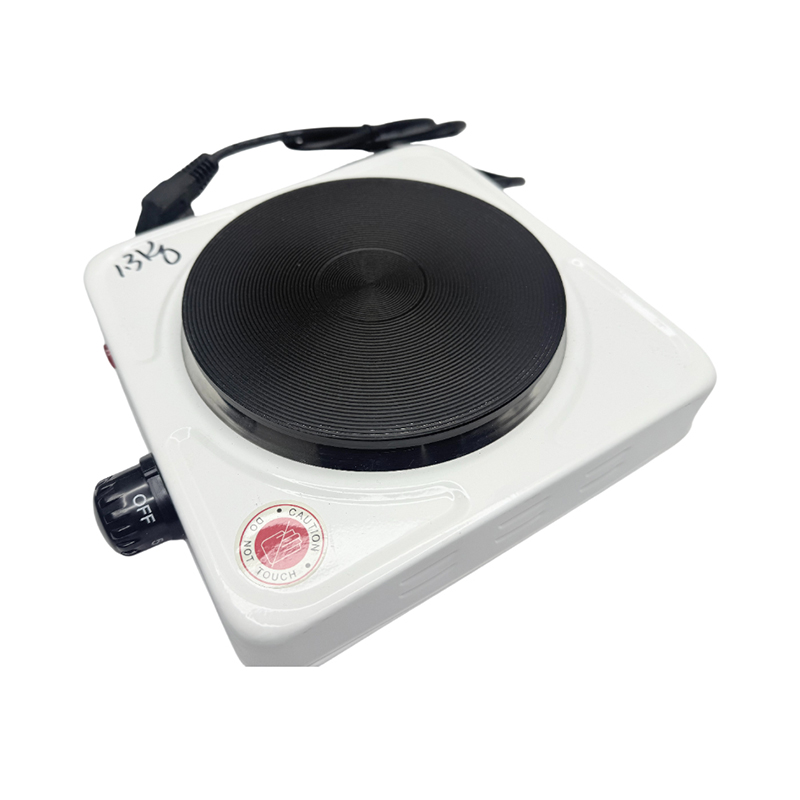 X0873 Infrared Laboratory Electric Heating PlateA general-purpose hot plate for routine bench heating of flat-bottomed beakers and flasks without an open flame.View Product →
The infrared electric heating plate is the general-purpose workhorse: it takes beakers, conical flasks and evaporating dishes, and it replaces the spirit lamp in the majority of routine heating tasks without an open flame on the bench.
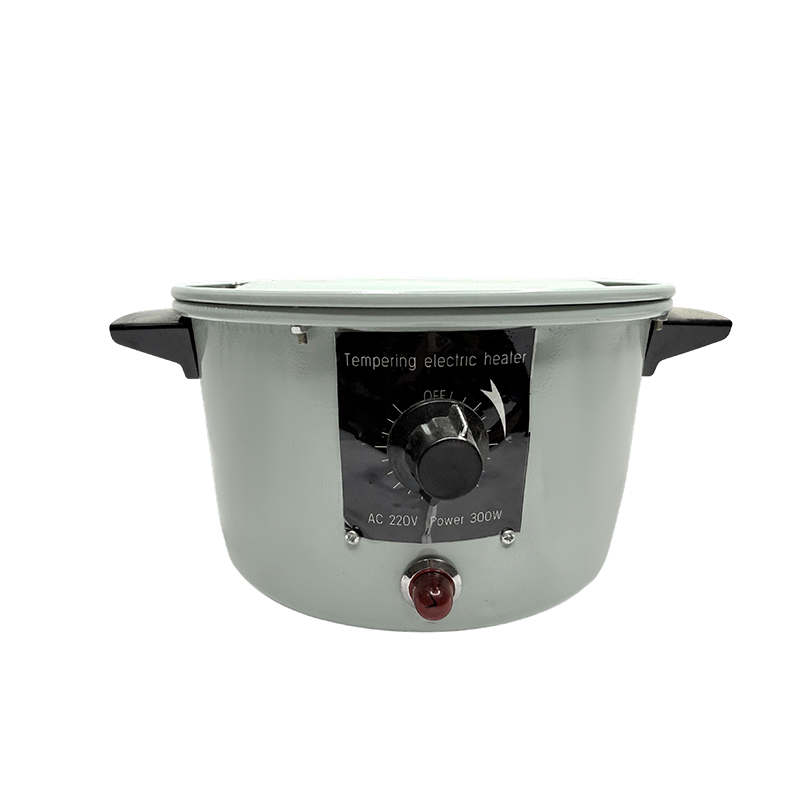 X0871 Adjustable-Temperature Heating Sleeve for FlasksFor round-bottom flask heating, distillation and reflux, this 500 ml sleeve provides even contact and teacher-readable temperature control.View Product →
For round-bottom flasks, distillation and reflux, an adjustable-temperature heating sleeve gives even contact around the flask and a control that a teacher can set and a student can read.
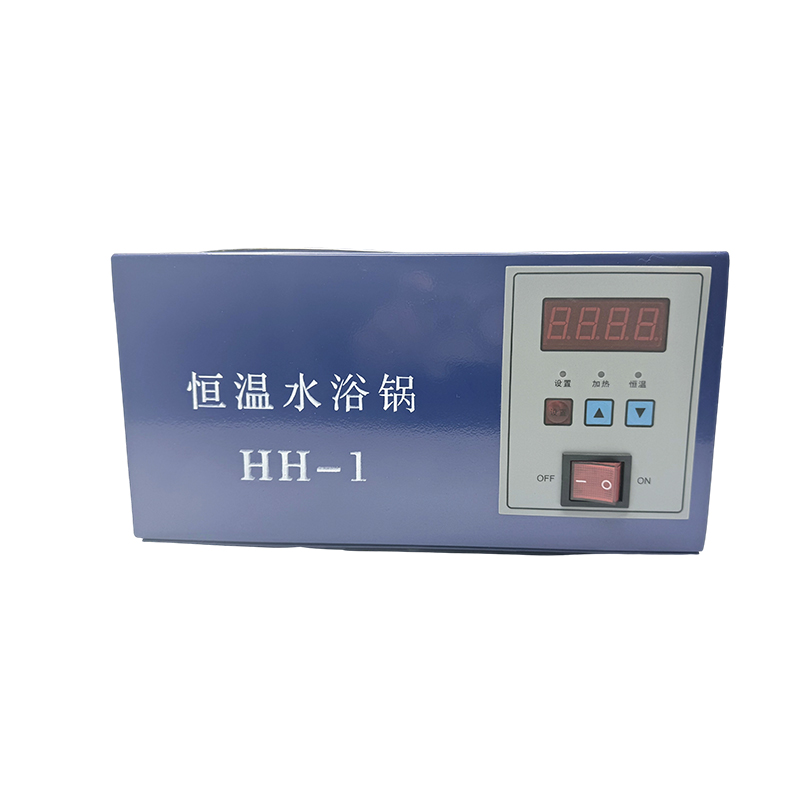 X0874 Constant-Temperature Laboratory Water BathSingle-hole constant-temperature bath with LCD display and ≤0.5°C accuracy, suited to gentle warming and melting tasks where direct heat is too strong.View Product →
A constant-temperature water bath handles the gentle work — melting agar, warming solutions to a set point, heating anything where a naked surface would be too aggressive. Together these three cover most of what a school actually does with a lamp.
If you are rebuilding a whole laboratory rather than replacing lamps bench by bench, it is worth reviewing the full chemistry teaching instruments range alongside your apparatus list, so that stands, clamps and heating devices arrive as one compatible set.
A hot plate removes the open flame and the fuel bottle, but it introduces a burn hazard that outlasts the lesson. With clear labelling, a fixed heating zone and supervision, most schools find the risk easier to manage than a flame, because nothing is invisible and nothing is being refilled.
Only for heating water and aqueous solutions, and only with strict rules: no metal, no sealed containers, no superheated liquid carried across the room. It is a useful second device, not a substitute for controlled heating of glassware.
Yes, for flame tests, loop sterilisation and a few classic demonstrations. Keep a small number of contained burners, store them separately and issue them only for those specific practicals.
Buying on wattage alone. A high-power plate with a coarse thermostat gives worse results than a modest plate with a proper controller, and it puts more load on the laboratory circuit.
Compare the purchase price with two or three years of ethanol, wicks, matches and replacement lamps, then add the value of experiments that become possible once temperature can actually be set. In most departments the case is straightforward.
Replacing spirit lamps is less about finding one clever device and more about deciding which heating tasks deserve a flame and which do not. Once routine boiling, melting and small-scale reactions move to electric heaters, the lamp shrinks back to what it is genuinely good at — and the lesson becomes calmer, cleaner and far easier to measure. If you would like help mapping devices to your existing practical list, the team is happy to talk through bench layouts and voltage requirements via the contact page.
Recommended Products


+86-18630650508 +86-0574-62500588

+8618630650508

 No. 588, Chaoyang South Road, Ditang Street, Yuyao, Ningbo City, Zhejiang Province, China


 English
 русский
 Español
