2026-05-08
Content
Physics teaching instruments are far more than mere experimental aids—they serve as the essential bridge connecting abstract theory to concrete cognition. Research indicates that in a junior high school physics experiment on "Floating and Sinking of Objects," the use of specially designed low-cost teaching aids (costing less than $1 USD) improved students' understanding accuracy of the control variable method by 27% and increased experimental inquiry efficiency by 40%. At the high school and university levels, physics laboratory equipment accounts for 20.5% of the global educational scientific laboratory equipment market (2025 data), with a stable compound annual growth rate of 6.0%. These figures demonstrate that across foundational mechanics, electromagnetism, and optics experiments, high-quality physics teaching instruments significantly reduce cognitive load, transforming abstract formulas into observable, measurable, and verifiable experimental phenomena, thereby systematically elevating teaching quality.
Based on the knowledge structure of physics and instructional objectives, physics teaching instruments can be classified into four core categories: mechanical measurement, electromagnetism experiments, optics inquiry, and thermal & wave phenomena. Each category corresponds to specific conceptual construction needs, and instrument selection directly determines whether students can achieve the cognitive leap from "experience" to "measurement" to "inquiry."
Mechanics experiments form the starting point of physics instruction. Core instruments include vernier calipers, micrometer screw gauges (micrometers), stopwatches, spring dynamometers, and photogates. Vernier calipers achieve length measurements with 0.02 mm precision, while micrometers reach 0.01 mm (0.001 cm) accuracy. Together, they support students' deep understanding of "error" and "significant figures." Spring dynamometers visually demonstrate the linear relationship between force and deformation through Hooke's Law, while air tracks—by nearly eliminating friction—enable students to verify Newton's laws of motion under near-ideal conditions, a precision breakthrough unattainable with traditional inclined plane experiments.
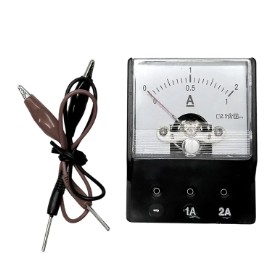
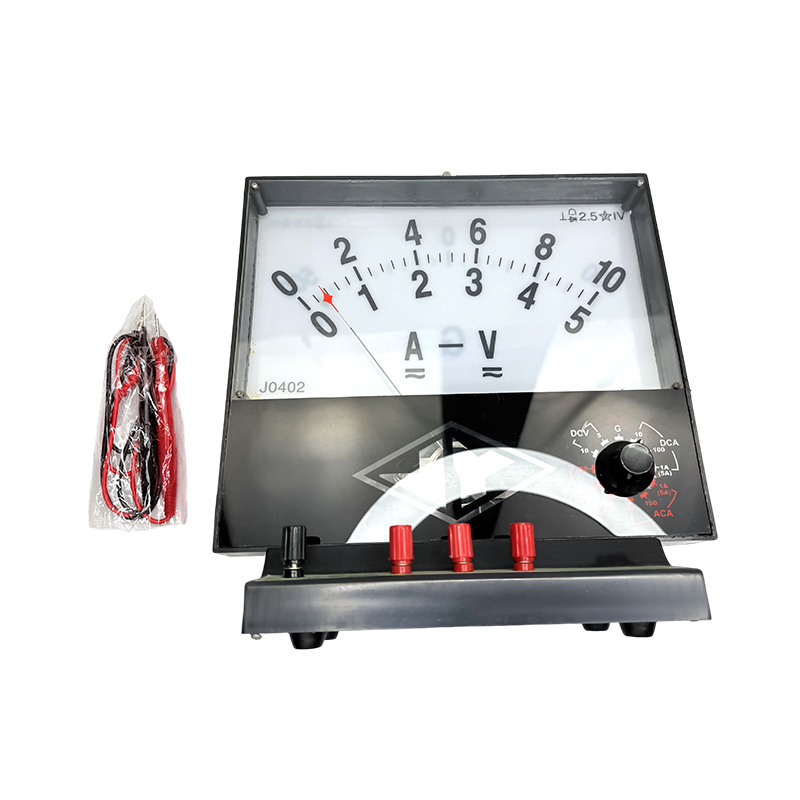
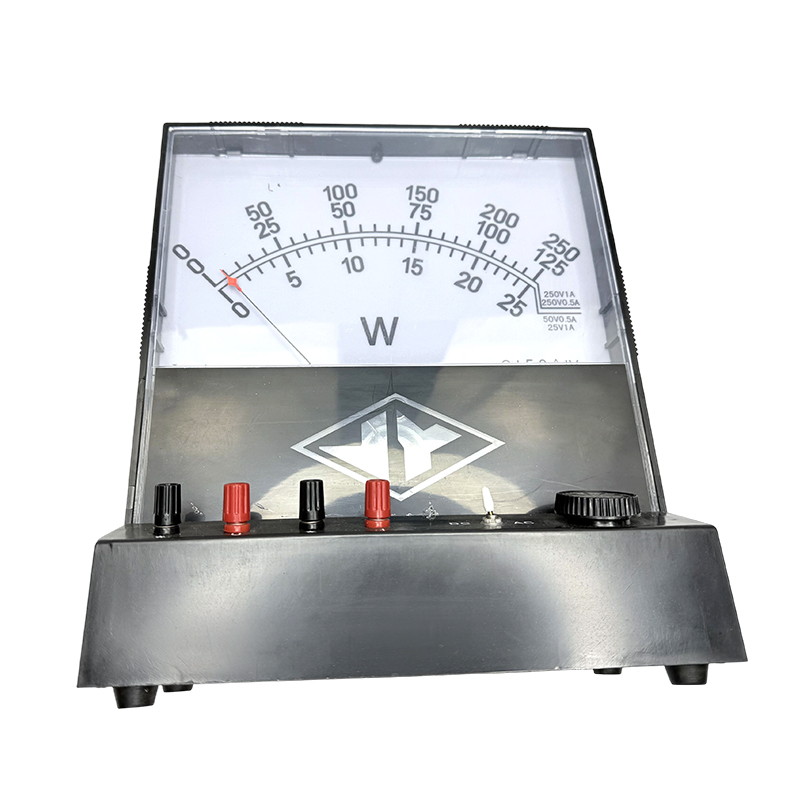
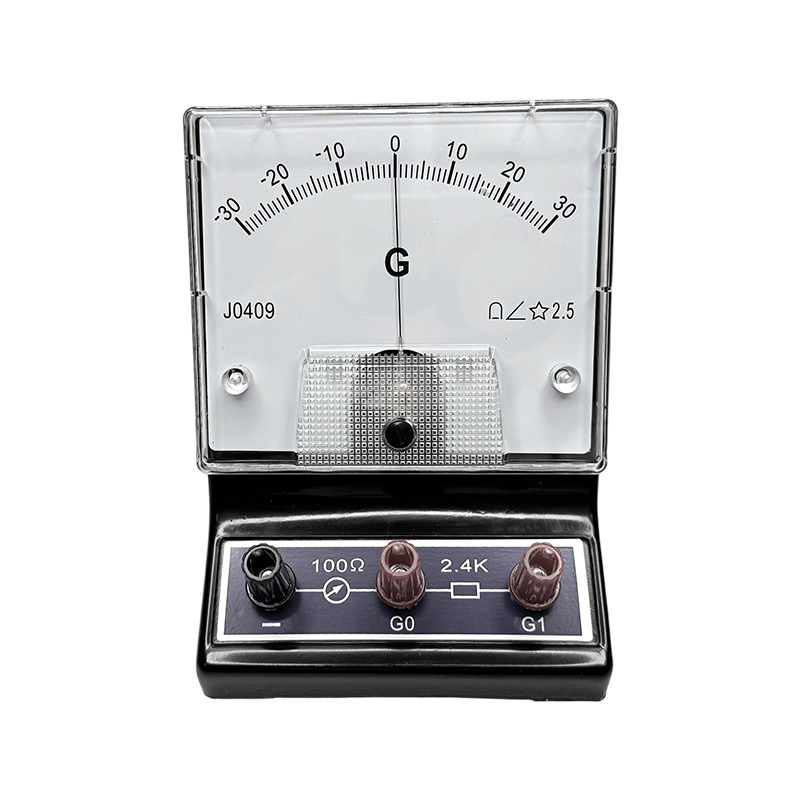
Electromagnetism experiment instruments represent the most densely configured module in secondary and university laboratories. Core devices include ammeters, voltmeters, galvanometers, resistance boxes, rheostats (sliding resistors), and DC regulated power supplies. Ammeters are connected in series to measure current intensity, while voltmeters are connected in parallel to measure potential difference; together they enable foundational experiments on Ohm's Law, series and parallel circuits, and electrical power. Galvanometers detect weak currents (typically at the microampere level) and are critical for demonstrating electromagnetic induction and meter modification experiments. Rheostats continuously adjust resistance to control circuit current, making them more suitable than resistance boxes for demonstrating dynamic processes.
Optics experiments rely on the optical bench as the foundational platform. Its long straight track with graduated scales allows precise positioning and adjustment of light sources, lenses, prisms, and screens. Combined with convex lenses, concave lenses, triangular prisms, and plane mirrors, students can systematically study the law of reflection, law of refraction, the lens formula (1/u + 1/v = 1/f), and white light dispersion phenomena. Ray boxes produce parallel light beams that make light paths visible, significantly reducing the operational difficulty of geometric optics experiments. In advanced experiments, spectrometers measure light wavelength and refractive index, serving as the key device bridging geometric optics and physical optics.
Thermal experiments center on thermometers (typically ranging from -10°C to 110°C or wider), calorimeters, and constant-temperature water baths for measuring temperature changes and studying heat conduction, specific heat capacity, and phase transition laws. Acoustic experiments primarily rely on tuning forks (with fixed, clearly marked frequencies), resonance apparatus, and sonometers. The sonometer allows quantitative verification of the frequency formula f ∝ (1/L) × √(T/μ) by adjusting string tension, length, and linear density, transforming musical acoustic principles into calculable physical models.
The selection of physics teaching instruments should not be guided solely by "high-end" or "advanced" criteria, but rather matched to curriculum standards, student cognitive stages, and specific experiment types. According to cognitive theory, physics experiments can be categorized as experience-based, observation-based, operation-based, and measurement-based, each with significantly different instrument requirements.
Experience-based experiments (such as sensing temperature by hand or experiencing friction through walking) typically do not require precision instruments and can even utilize everyday items. Observation-based experiments (such as observing light dispersion or water boiling) require instruments with large size, high visibility, and obvious phenomena, sometimes necessitating magnification or recording functions. Operation-based experiments (such as proper use of ammeters and balances) emphasize instrument standardization, safety, and universality, aiming to cultivate rigorous operational habits. Measurement-based experiments (such as density determination or Ohm's Law verification) demand instruments with standardization, tool functionality, and repeatability to ensure data reliability and controllable error.
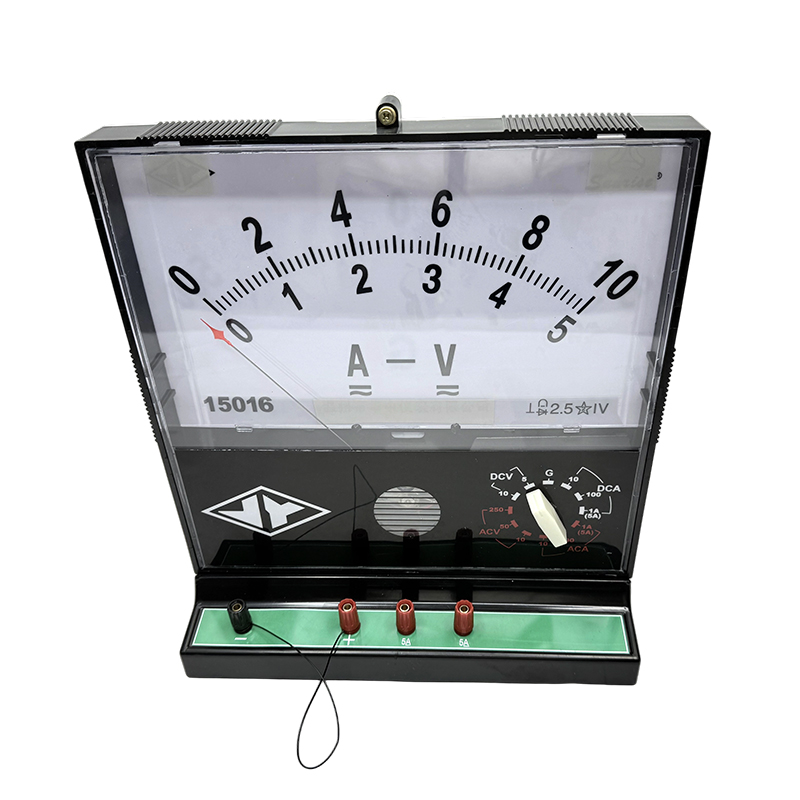
At the junior high level, priority should be given to structurally simple, intuitively demonstrative instruments. For example, in electrical experiments, pointer-type ammeters and voltmeters are more beneficial than digital meters for helping students understand the correspondence between "pointer deflection angle and physical quantity magnitude." At the high school level, rheostats, resistance boxes, and bridges (such as the Wheatstone bridge) can be introduced for quantitative inquiry. University general physics laboratories require precision equipment such as air tracks, oscilloscopes, spectrometers, and Michelson interferometers to support error analysis and advanced physical law verification.
| Educational Stage | Typical Experiment Topics | Recommended Core Instruments | Selection Priority |
|---|---|---|---|
| Junior High (Grades 7-9) | Simple circuits, buoyancy, light reflection | Battery holders, small bulbs, ammeters, convex lenses, spring dynamometers | High safety, simple operation, obvious phenomena |
| Senior High (Grades 10-12) | Electromagnetic induction, mechanical energy conservation, momentum theorem | Galvanometers, air tracks, photogates, oscilloscopes | Quantitative measurement, error analysis, data recording |
| University (General Physics) | Interference and diffraction, spectral analysis, Millikan oil drop experiment | Spectrometers, Michelson interferometers, vacuum coating apparatus | High precision, repeatable, supports inquiry-based design |
The value of physics teaching instruments extends beyond verifying known laws. Through the process of "hands-on and minds-on" engagement, they cultivate students' scientific inquiry capabilities, evidence awareness, and model-building thinking. The process of using instruments itself serves as a training ground for scientific methodology.
Taking electrical experiments as an example, students using ammeters and voltmeters must complete the full workflow of "select range → connect properly (series/parallel) → read data → record units → analyze error." This process compels students to focus on experimental condition control, measurement precision, and data validity, naturally forming norms of scientific argumentation. Research shows that adequate configuration and efficient utilization of physics laboratory equipment are significantly positively correlated with students' physics academic performance; schools with equipment shortages or low utilization rates commonly see students struggling with conceptual understanding and weak experimental skills.
Innovation in physics teaching instruments need not depend on high investment. A "deformable body" teaching aid designed based on the control variable method enables continuous switching among floating, suspension, and sinking states by regulating displaced liquid volume, liquid density, and object mass within a single apparatus. In teaching practice with 120 eighth-grade students, this device not only improved inquiry efficiency by 40% but also demonstrated large-scale scalability due to its extremely low cost (under $1 USD). This demonstrates that the educational effectiveness of instruments depends on whether they precisely address cognitive difficulties, not on absolute cost.
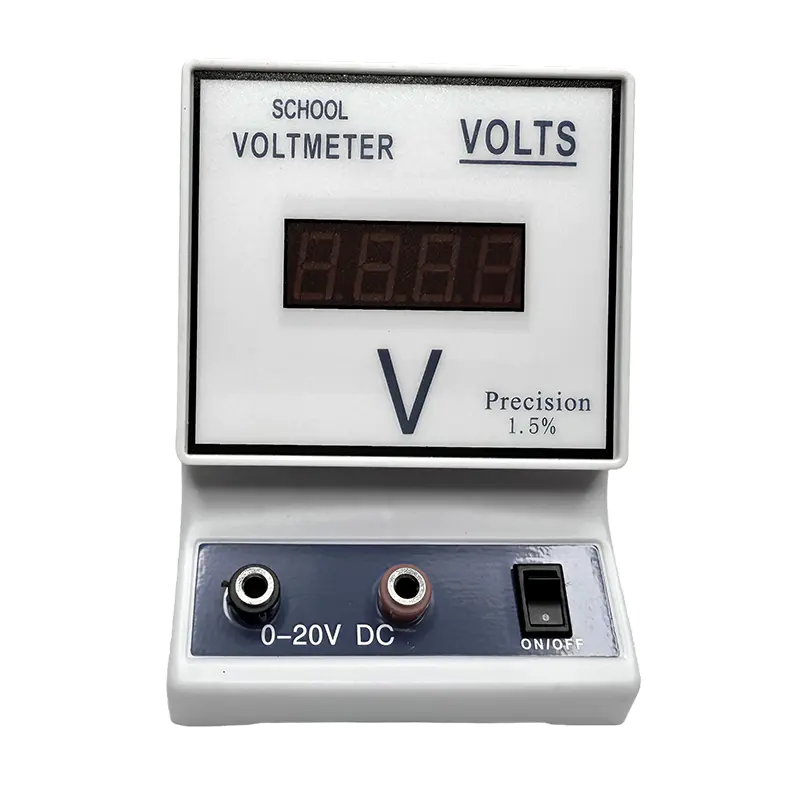
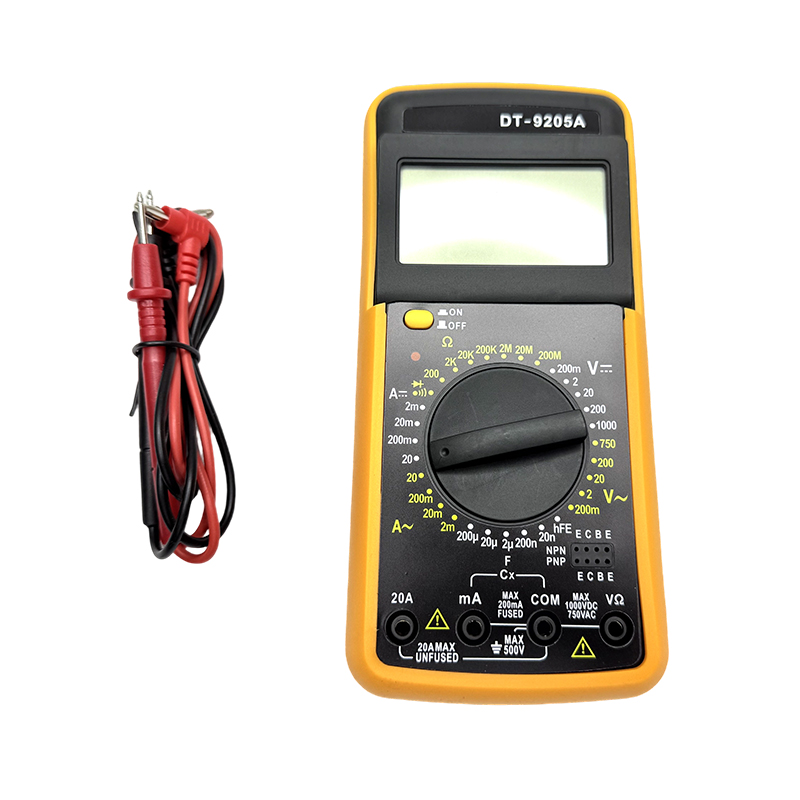
Physics teaching instruments are currently undergoing transformation from traditional analog to digital and intelligent systems. Digital voltmeters, digital timers, and experiment systems based on smartphone sensor applications (such as Phyphox) are complementing traditional pointer-type instruments. Digital instruments offer advantages of high data acquisition frequency, real-time graphing, and reduced human reading errors; traditional instruments excel in visually demonstrating continuous changes in physical quantities, helping students establish direct mapping between "pointer deflection and physical quantity magnitude." An ideal laboratory configuration should retain both types, enabling students to understand the applicable boundaries of different measurement principles through comparative use.
Safety management in physics laboratories is the prerequisite for experimental instruction. Improper instrument use can not only damage equipment but also trigger accidents such as electric shock, burns, and glass cuts. Establishing systematic safety management protocols is an essential construction task for every school.
The precision of physics teaching instruments degrades over time and with increased usage frequency. Vernier calipers and micrometers require periodic zero-error verification using standard gauge blocks; ammeters and voltmeters should undergo full-range calibration annually; optical element surfaces must be cleaned with dedicated lens paper to avoid scratching. Establishing a "use registration - regular inspection - timely repair - disposal and update" full lifecycle management archive is the institutional guarantee for ensuring experimental data reliability. According to market data, online procurement channels for educational scientific laboratory equipment are expanding at a compound annual growth rate of 9.4%, projected to account for 48.5% of total market revenue by 2034, providing schools with convenient digital channels for efficient instrument updates.
With the deepening of educational informatization, physics teaching instruments are evolving toward modularity, digitization, and interdisciplinary integration. Future physics laboratories will no longer be simple accumulations of isolated devices, but intelligent inquiry spaces integrating data acquisition, real-time analysis, virtual simulation, and physical operation.
Digital probes such as force sensors, temperature sensors, photogates, and voltage sensors, combined with data loggers and computer software, enable real-time acquisition and visualization of physical quantities. For example, in Newton's Second Law experiments, force sensors directly measure tension while motion sensors record displacement-time curves, allowing students to obtain the relationship graph between acceleration and net force without manual timing and plotting. This technology not only improves experimental efficiency but also enables students to focus their attention on inquiry into physical laws and model interpretation rather than tedious data recording.
For high-cost, high-risk, or microscopic-scale experiments (such as nuclear physics, high-voltage discharge, or molecular motion), virtual simulation software provides safe and repeatable alternatives. However, virtual experiments cannot fully replace the operational feel, error analysis, and unexpected discoveries brought by physical instruments. Therefore, future teaching models should follow a "virtual preview - physical operation - data comparison - reflection and expansion" hybrid path, allowing both modalities to fulfill their respective strengths.
Modern scientific and technological problems often exhibit interdisciplinary characteristics. Physics teaching instrument configurations are beginning to incorporate chemistry, biology, and engineering elements. For example, optical microscopes, spectrometers, and oscilloscopes from physics laboratories can be used for preliminary investigations in environmental and materials science; combined with 3D printing technology, students can autonomously design and manufacture experimental fixtures and models, introducing engineering thinking into physics experiments. This integration not only broadens instrument application scenarios but also cultivates students' comprehensive capabilities for solving complex real-world problems.
Recommended Products


+86-18630650508 +86-0574-62500588

+8618630650508

 No. 588, Chaoyang South Road, Ditang Street, Yuyao, Ningbo City, Zhejiang Province, China


 English
 русский
 Español