2026-02-20
Content
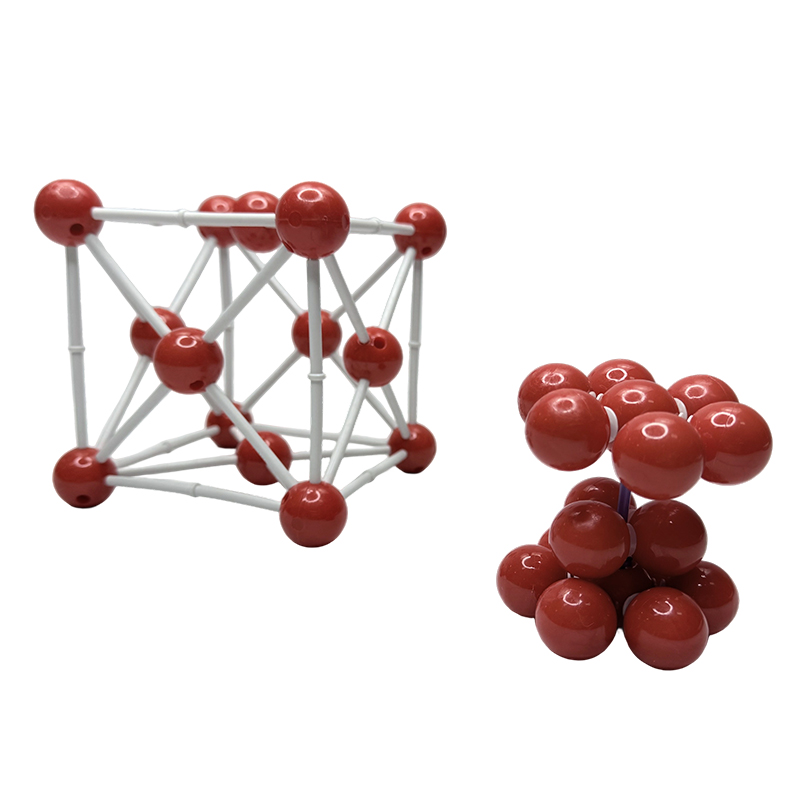
One of the core products. They are excellent tools for cultivating students' spatial imagination, especially suitable for junior high school students whose abstract thinking is not yet fully mature.
Using 3D geometric models for assembly and disassembly training helps students understand the construction principles of polyhedra. Through repeated operations, students can more intuitively understand the correspondence between "faces, edges, and points," as well as the spatial transformation between different geometric shapes.
Combining the graphic projection tools in School Teaching Aids, 3D models are projected onto a 2D diagram. Students need to deduce the original 3D structure from the projected diagram. This cross-verification process greatly enhances students' logical reasoning and spatial perception abilities.
Using geometric models to simulate real-life architectural structures or physical phenomena (such as inclined planes, levers, etc.). This teaching method breaks down the barriers between mathematics and reality, allowing students to understand that "mathematics can be seen and touched," thereby enhancing their learning initiative.
Recommended Products


+86-18630650508 +86-0574-62500588

+8618630650508

 No. 588, Chaoyang South Road, Ditang Street, Yuyao, Ningbo City, Zhejiang Province, China


 English
 русский
 Español