2026-08-28
Content
A middle school biology teacher recently asked us whether she should replace her old optical microscopes with digital models. Our answer was: it depends on the lesson plan. For schools and training labs, the analog vs digital microscope question is rarely about which technology is better overall. It is about which tool fits the way you teach. When a whole class must see the same specimen at the same time, a digital microscope saves the session. When students need repeated hands-on practice with real optics at the lowest cost per workstation, an analog microscope still wins. This article compares the two types across image quality, magnification, cost, and classroom use, so you can make a buying decision you will not regret.
An analog microscope, also called an optical or compound microscope, forms a magnified image by sending light through glass objectives to the observer's eye through an eyepiece. It has no camera, no screen, and no software. It is the same basic design used in school laboratories for generations, and it remains dependable because there is little to fail.
A digital microscope uses the same optical principles but replaces the eyepiece's final image with a camera sensor that displays the image on a monitor, laptop, tablet, or phone. Entry-level models are often USB microscopes with a fixed lens for close-up work, while teaching-grade digital microscopes keep a full objective turret and add capture, measurement, and annotation software.
The two types share most of their glass and illumination components. The real difference is the output: one image ends at the eye, the other begins on a screen.
The table below summarizes the differences that matter most when equipping a biology laboratory or general science classroom.
| Feature | Analog (optical) microscope | Digital microscope |
|---|---|---|
| Viewing | Direct through eyepiece, one student at a time | On-screen, allows group and remote viewing |
| Image capture | Not built in | Photo and video recording built in |
| Magnification | True optical magnification up to about 1000x | Optical plus digital zoom; final value depends on sensor and screen |
| Field of view | Limited by the eyepiece | Often wider at the same objective |
| Power and portability | No power needed, fully portable | Requires power or battery and a display |
| Typical purchase price | Lower per unit | Higher, especially with a good camera |
| Maintenance | Simple lenses and mechanics | Camera, electronics, and software need care |
| Best fit | Individual practice, dissection, field use, tight budgets | Demonstrations, recording, measurement, remote teaching |
Two specifications cause the most confusion: maximum magnification and field of view. An analog compound microscope can reach 1000x with a 100x oil-immersion objective, while most educational digital microscopes offer roughly 10x to 200x optical magnification. Manufacturers often list higher numbers obtained by digital zoom, which enlarges pixels on the screen but does not reveal additional detail. When you compare models, check the optical objective range first and treat digital zoom as a convenience rather than a resolution upgrade.
Digital microscopes often win on field of view. Because the camera sensor can capture a wider area than a typical eyepiece, the same specimen at the same objective may appear smaller but cover a wider frame, which makes scanning and locating specimens much easier for younger students. This is one of the two key differences experienced users notice immediately, along with the ability to share the image.
Chart 1. Relative cost index to reach a given magnification; digital models add camera and display costs (illustrative).
The practical implication for school budgets: if your curriculum requires 400x to observe cell details, invest in a good optical microscope or a hybrid digital model with a real 40x objective. If your goal is whole-class observation of prepared slides and larger specimens, a digital microscope offers more teaching value per dollar.
Chart 2. Main reasons educators choose a digital microscope for classroom use (illustrative breakdown).
A practical rule from our work with schools: equip individual practice stations with dependable analog microscopes and add one or two digital teaching scopes for demonstrations. For tight budgets, a classroom student microscope kit gives you reliable optics at a price that allows one per student. This mix covers both teaching modes without doubling the budget.
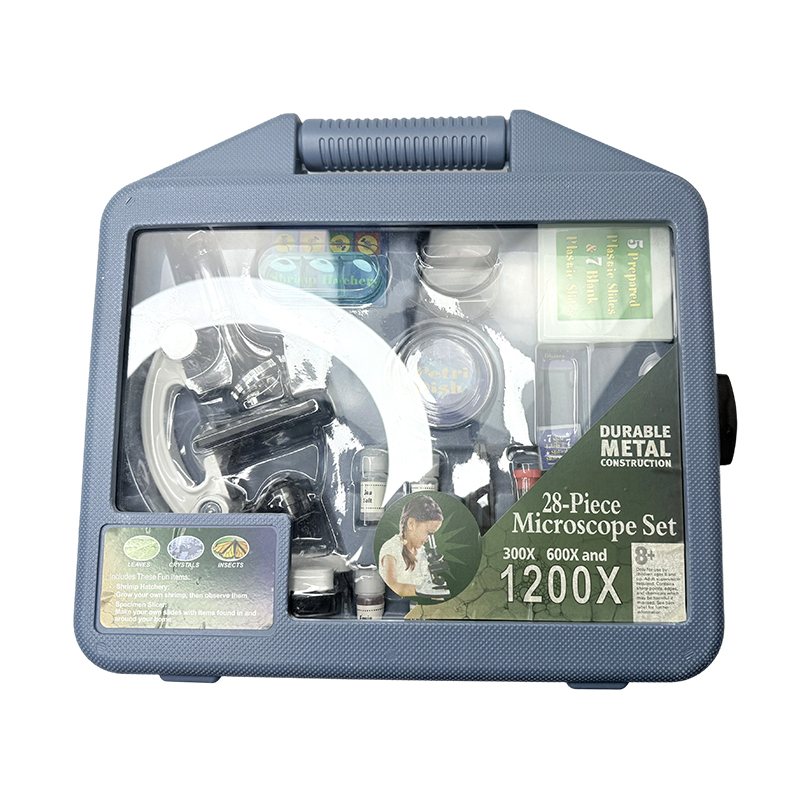 Custom Biology student microscope kit Manufacturers, OEM/ODM FactoryAs a China ODM/OEM Biology student microscope kit manufacturers and factory, Yuyao Xueyou Teaching Equipment Co., Ltd specialized in cust...View Product →
Purchase price is only the first number. A digital teaching station needs a monitor, stand, cables, and often a computer. It consumes power, and its camera or software may need repair or replacement during the life of the instrument. An analog microscope needs only occasional cleaning and servicing. Chart 3 shows typical price ranges for school-grade instruments.
Chart 3. Typical price ranges in USD for school-grade microscopes, approximate market ranges.
In practice, the total cost difference is smaller than it looks. Many classrooms already have computers, so a USB digital microscope adds imaging capability for little more than a good analog model. A fully integrated digital teaching scope with a monitor is a larger investment, but it replaces a microscope-camera-computer stack and works as a permanent demonstration station in a dedicated biology room.
For a dedicated biology laboratory, a school laboratory biological microscope with a camera output balances teaching optics and digital convenience in one unit.
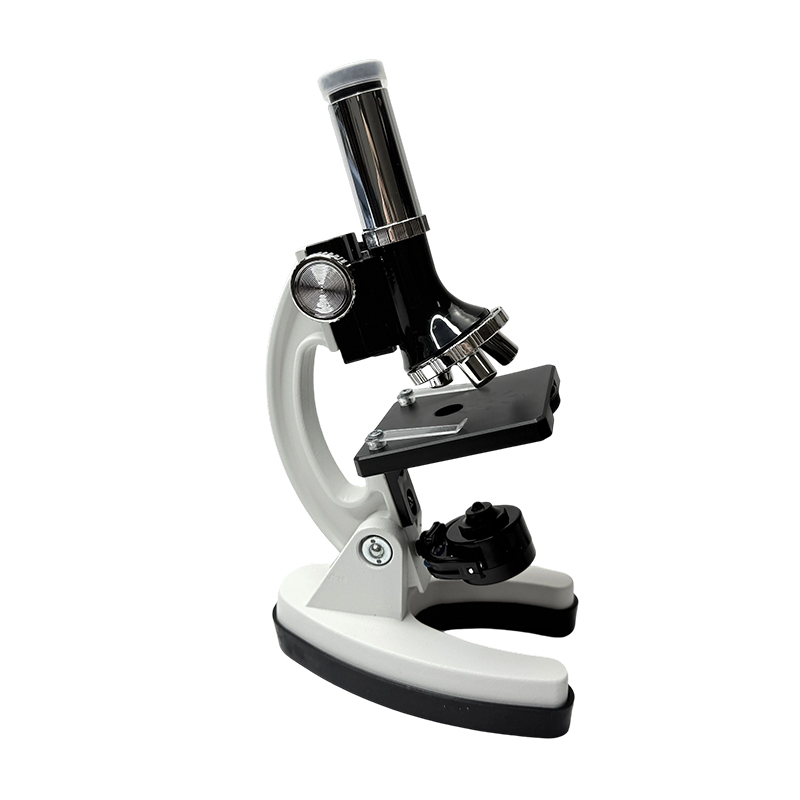 Educational Microscope Manufacturers, Biological Microscope FactoryYuyao Xueyou Teaching Equipment Co., Ltd is a China educational microscope manufacturers and OEM/ODM factory, specializing in custom biol...View Product →
Work through these six questions before placing an order:
If you need help turning the answers into a specific instrument list, browse our full biology teaching instrument range or contact our team for guidance.
For demonstrations and group work, yes, for most lessons. For individual skill practice and exam preparation, most teachers still prefer analog stations because direct eyepiece observation trains careful technique. A mixed setup is usually the safest investment.
The camera, monitor, and digital zoom change the field of view, magnified size, and color rendering. On-screen magnification is effective magnification, not purely optical magnification. This is normal behavior, not a defect.
No. At very high digital zoom, detail is lost because the image is enlarged from fewer pixels. Effective magnification depends on the objective, sensor, and screen size combined. Choose the lowest magnification that clearly shows the structure students need to see.
Keep the sensor clean, check calibration, update firmware, and protect the screen and cables. Analog microscopes mainly need lens cleaning and occasional servicing of the mechanical stage. If your team is new to digital observation, a prepared biology microscope slide education kit removes the variable of sample preparation and lets teachers focus on technique.
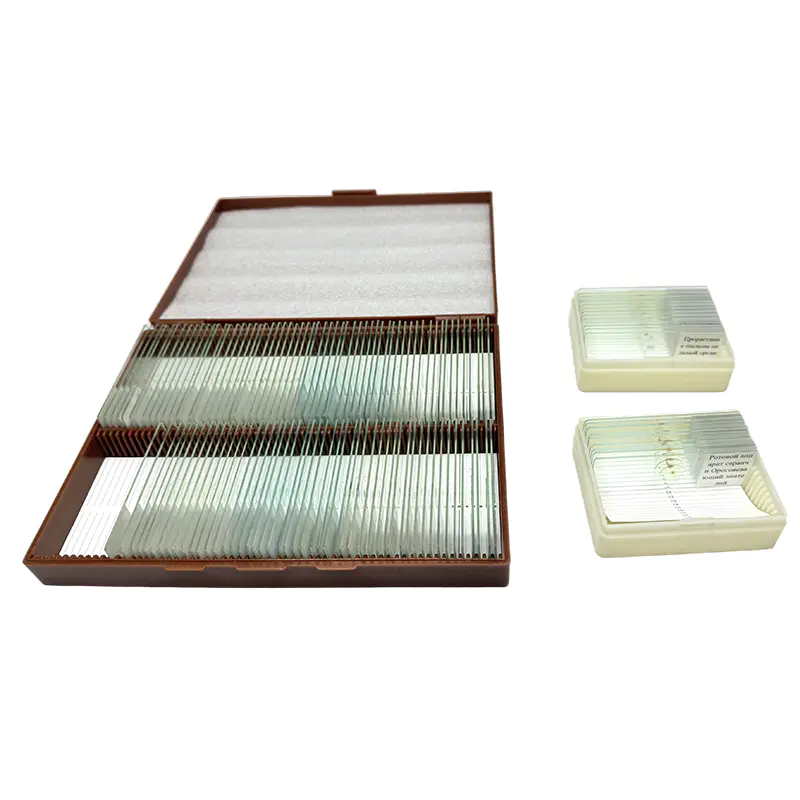 Custom Microscope slide biology education kit, biology nature Manufacturers, OEMAs a China ODM/OEM Microscope slide biology education kit, biology nature manufacturers and factory, Yuyao Xueyou Teaching Equipment Co.,...View Product →
The analog vs digital microscope debate is not about which technology is superior. It is about what happens in your classroom three times a week. Analog microscopes remain the cost leader and the best way to train patient, careful observation. Digital microscopes add visibility, documentation, and efficiency. Schools that understand both and buy a sensible mix consistently get more value from their lab budget than those who choose a side based on marketing. When in doubt, start with the lesson plan, count the students, and choose the tool that puts the image in front of the eyes that need to see it.
Recommended Products


+86-18630650508 +86-0574-62500588

 No. 588, Chaoyang South Road, Ditang Street, Yuyao, Ningbo City, Zhejiang Province, China


 English
 русский
 Español